
Supply Chain Piracy: The "Backdoor" Entry Point Targeting Modern SDKs.
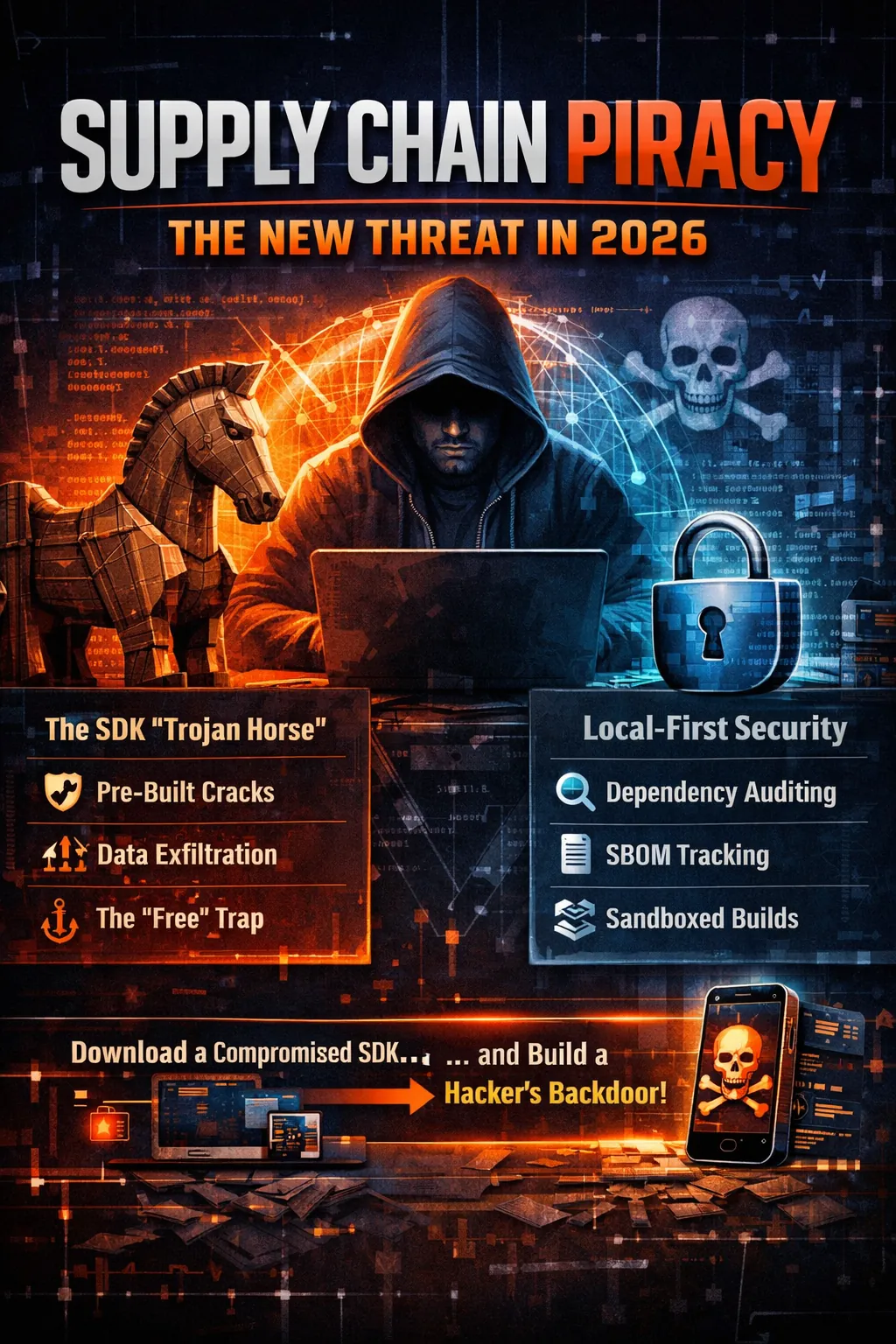
For years, developers focused on protecting their finished APKs and IPAs from external crackers. But in 2026, the threat has moved upstream. Supply Chain Piracy is the new frontier, where hackers no longer wait for your app to hit the store—they wait for you to download a library.
The SDK "Trojan Horse"
Modern apps rely on dozens of third-party SDKs for analytics, ads, and social features. Pirates are now creating or compromising "useful" free libraries that perform their tasks perfectly while hiding a backdoor in the background.
- Pre-Built Cracks: A compromised library can detect if it's being used in a premium app and automatically disable license verification logic during the compilation phase.
- Data Exfiltration: Because the library is part of your "trusted" code, it has the same permissions as your app, allowing it to silently send user data or API keys to pirate servers.
- The "Free" Trap: Many of these compromised libraries are marketed as free alternatives to expensive premium SDKs, specifically targeting independent developers looking to save costs.
Why "Local-First" Security is Critical
In 2026, you cannot trust a library simply because it is popular on GitHub or npm. Security must start on your local machine:
- Dependency Auditing: Using local AI tools to scan library source code for obfuscated calls or suspicious network requests before integrating them into your project.
- Software Bill of Materials (SBOM): Maintaining a strict SBOM to track every component and ensuring that hashes match verified versions.
- Sandboxed Builds: Running your build process in isolated environments to prevent a malicious SDK from accessing your local development secrets.
The Developer's Lesson: In the era of AppSec 2026, your app is only as secure as its weakest dependency. If you don't audit your supply chain, you aren't just building an app—you're building a pirate's gateway.