
Cross-Border Legal Victories: The DOJ vs. Bulletproof Hosts — A New Hope for Developers.
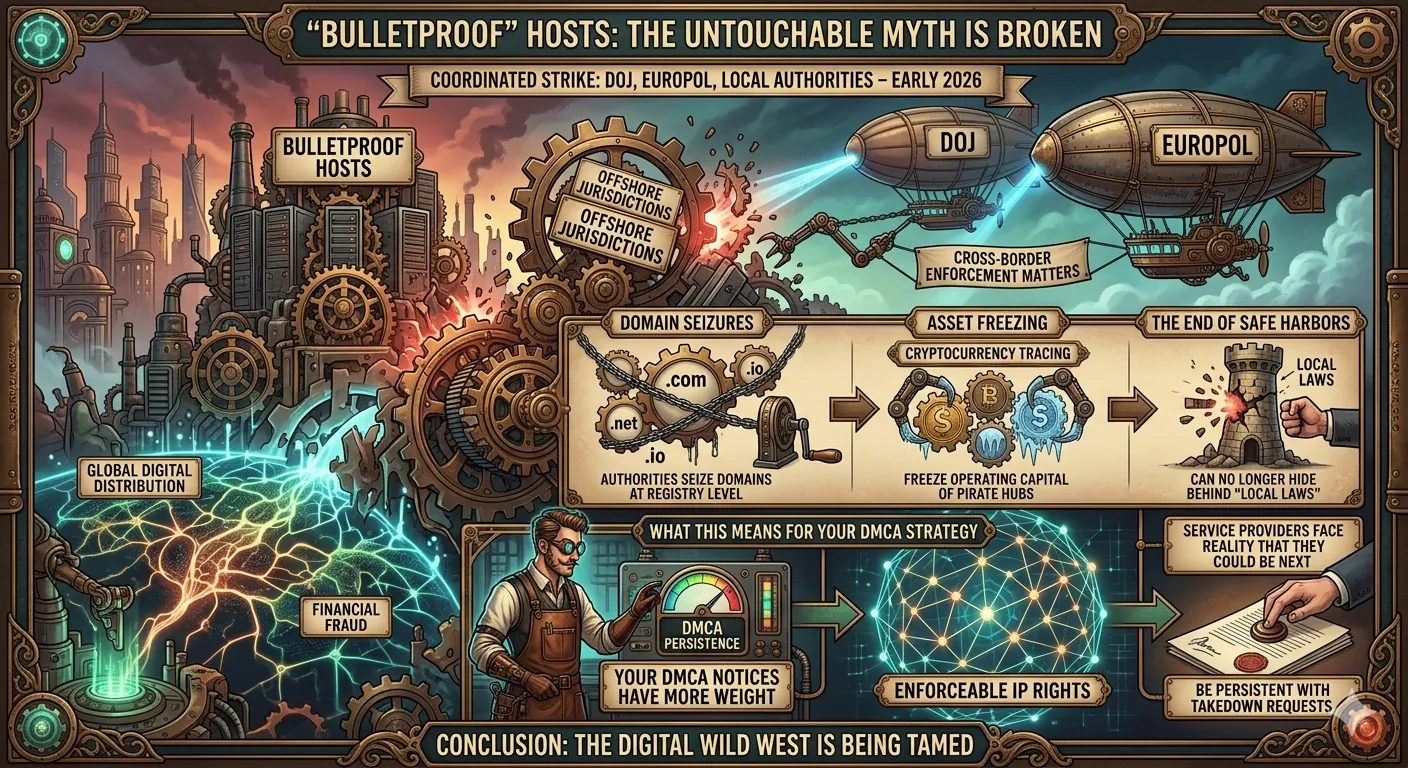
For years, "Bulletproof" hosts were the final bosses of the piracy world. Located in jurisdictions like Bulgaria or far offshore, these providers openly bragged about ignoring DMCA notices. However, in early 2026, a coordinated strike by the U.S. Department of Justice (DOJ), Europol, and local authorities has changed the game forever.
The "Untouchable" Myth is Broken
The 2026 operation targeted the physical infrastructure of these hosts. By seizing thousands of servers and taking control of primary domains, authorities proved that "offshore" does not mean "offline." For developers, this is news because it removes the sense of hopelessness when dealing with pirate sites that previously laughed at legal threats.
Why Cross-Border Enforcement Matters
- Domain Seizures: Authorities didn't just block IPs; they seized the
.com,.net, and even some.iodomains at the registry level, making the pirate sites vanish from the global DNS system. - Asset Freezing: By tracing cryptocurrency payments used for "bulletproof" services, investigators were able to freeze the operating capital of these pirate hubs.
- The End of Safe Harbors: These hosts can no longer hide behind "local laws" when the crime involves global digital distribution and financial fraud.
What This Means for Your DMCA Strategy
Now that the "jurisdictional shield" is cracking, your DMCA notices have more weight. Service providers who previously ignored you are now facing the reality that they could be next. It is more important than ever to be persistent with your takedown requests, as the legal "no-man's-land" where pirates live is rapidly shrinking.
Conclusion: The 2026 crackdown is a clear message: the digital wild west is being tamed. For the independent developer, this means your intellectual property rights are finally becoming enforceable globally.